The Impact of Towel Weaving Techniques on Quality
The weaving technique of towels is the core factor determining the comfort, water absorption capacity and lifespan of the product. Different weaving techniques have significant differences in production difficulty, cost investment and final product quality. They also serve as an important indicator to distinguish between low-end, mid-range and high-end towels. The common weaving techniques for towels on the market are mainly divided into basic and advanced categories. Ordinary plain weave towels belong to the entry-level technique, with a simple production process and low equipment requirements. They are formed by interweaving basic warp and weft yarns. The pile structure is sparse and uniform, and the overall feel is thin and soft. Although the production cost is low and the price is affordable, the durability is poor. Over time, problems such as loose pile, deformation and hardening, and rapid decline in water absorption capacity may occur. They are more suitable for short-term, low-frequency basic usage scenarios.
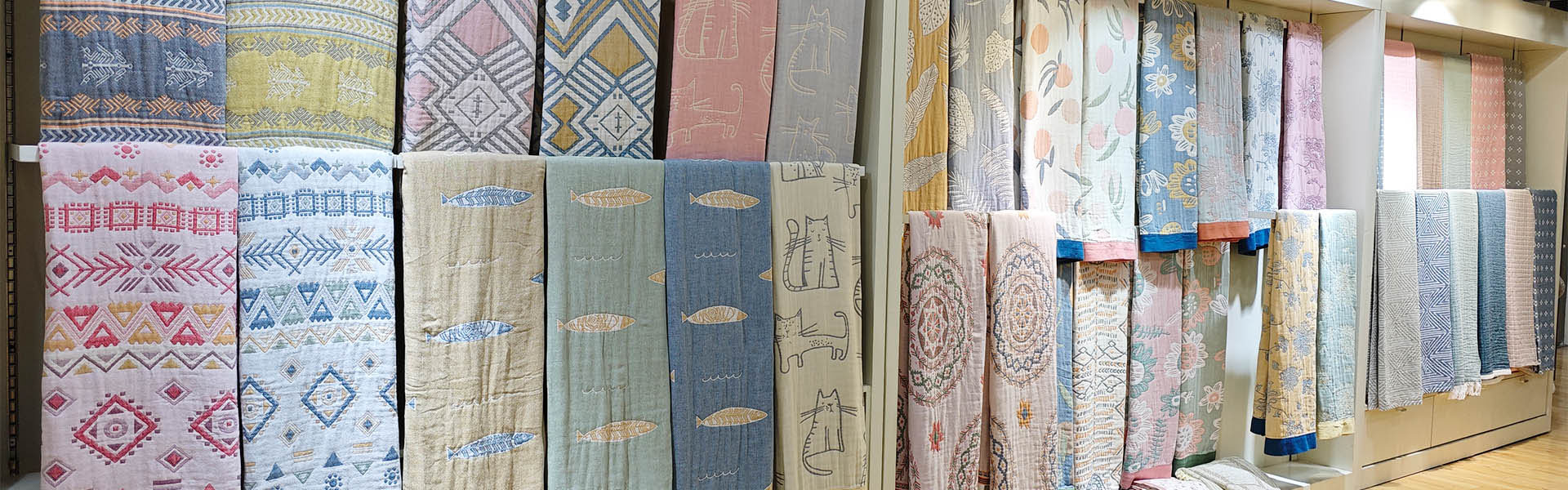
High-end towels generally adopt advanced weaving techniques combined with high-quality cotton processing technology to comprehensively enhance the product's texture and durability. Among them, jacquard, broken thread, and pile height increase are the mainstream upgrading techniques: The jacquard technique can weave exquisite patterns, brand logos or designs on the surface of the towel, combining practicality and aesthetics; The broken thread technique can achieve different densities and thicknesses of pile in local areas of the towel, enhancing the grip feeling and usage layering; The pile height increase technique elongates the length of the yarn pile, making the towel more fluffy and thick, and doubling the water storage and absorption capacity. At the same time, high-quality towels will use the combed cotton processing technique for raw materials. During the spinning stage, the combing equipment removes short fibers, cotton knots and impurities, only retaining long-combed cotton. The spun yarns are more fine, smooth and stronger in toughness, and the formed pile is dense and uniform, with a soft and skin-friendly touch. It can effectively reduce hair loss and ring-out problems, and does not easily become stiff and hard after repeated washing. In addition, weaving density is also a key indicator. The more times the yarns are interwoven per unit area, the more stable the towel structure will be, and the better the thickness, durability and water absorption capacity will be. Even after long-term, high-frequency use and multiple washes, it can maintain its original shape and performance, significantly extending the product's lifespan.